
 (602) 919-5915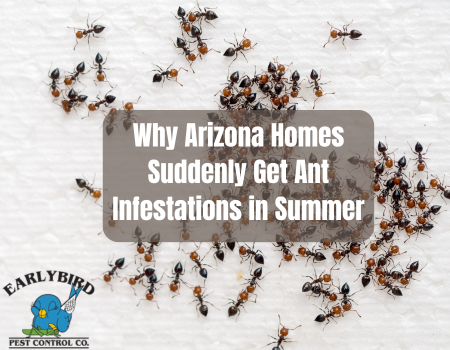
Summer in Arizona is relentless. Temperatures often climb above 100 degrees, and the desert sun dries the landscape while sending homeowners searching for ways to stay cool. While heat waves dominate attention, another seasonal challenge quietly makes its presence known: ants. Many homeowners are puzzled by sudden infestations that seem to appear out of nowhere. The truth is that moisture, heat displacement, and certain household conditions create the perfect environment for ants to invade during the hottest months.
Why Arizona Homes Suddenly Get Ant Infestations in Summer
Moisture is one of the primary drivers of ant activity that leads to infestations. Despite Arizona’s arid climate, water sources in and around the home are magnets for ants. Leaky pipes, condensation from air conditioners, or standing water near foundations can create microenvironments where ants thrive. Even a small puddle in a utility room or under a kitchen sink can attract entire colonies, as ants need consistent moisture for their survival and reproduction. During summer, when natural water sources are scarce, ants are more likely to infiltrate homes in search of hydration, turning minor leaks or damp areas into hotspots for infestation.
Heat displacement also plays a significant role. Arizona’s extreme summer temperatures force ants to seek cooler, shaded environments. Many species will leave their natural nests in the soil, under rocks, or near dry vegetation in search of shelter. Homes provide ideal conditions: shaded areas, insulated walls, and cooler interiors compared to the scorching outdoor environment. Once inside, ants are not just wandering, they are scouting for food, water, and safe nesting areas. This explains why ants often appear suddenly in kitchens, bathrooms, or utility spaces during the peak of summer heat.
Another contributing factor is household food sources and cleanliness. Even minimal crumbs, improperly stored pantry items, or unsealed pet food can attract ants once they have entered the home. Because summer is a time when people leave windows open for ventilation or spend more time outdoors, ants have more opportunities to enter through cracks, gaps, or poorly sealed doors. While food is not always the first reason ants invade, it becomes the incentive that keeps them inside once they’ve found a way in.
Preventing infestations requires a multi-layered approach. Controlling moisture is key. Homeowners should inspect plumbing for leaks, ensure that drip pans and condensation lines from AC units are functioning properly, and remove standing water near foundations. Even small improvements, like sealing damp areas under sinks or around water heaters, can make a noticeable difference. Eliminating moisture reduces the primary attraction that draws ants inside.
Sealing potential entry points is another critical step to help with infestations. Small cracks in walls, gaps around windows, and spaces under doors can serve as highways for ants seeking cooler interior environments. Applying weather stripping, caulking gaps, and using door sweeps can significantly reduce opportunities for invasion. While not all ants can be stopped this way, it limits the number that manage to enter, making other preventive strategies more effective.
Maintaining a clean environment is equally important when it comes to preventing infestations. Countertops should be wiped regularly, crumbs swept up promptly, and pantry goods stored in airtight containers. Pet food should be removed or sealed between meals, and trash bins should have tight-fitting lids. These practices make homes less appealing to ants once they enter, discouraging colonies from establishing a permanent presence.
For homes with recurring problems, professional inspections can identify hidden moisture sources, outdoor nesting areas, or subtle structural gaps that ants exploit. Treatment plans often combine barrier methods, targeted baits, and environmental modifications to prevent re-entry. The goal is not only to eliminate the immediate infestation but also to address the conditions that make the home attractive to ants in the first place.
In Arizona, summer ant infestations are rarely a random occurrence. They are the result of a combination of factors: moisture inside and near the home, the displacement caused by extreme outdoor heat, and accessible food or shelter. Understanding these dynamics allows homeowners to take proactive measures before ants become a significant problem.
Ultimately, ants are opportunistic and persistent, but with attention to the conditions that attract them, Arizona homeowners can reclaim their homes from these seasonal invaders, avoiding infestations. Recognizing the warning signs early, addressing moisture and heat-related vulnerabilities, and maintaining preventative measures are the most effective strategies to keep ants from turning summer comfort into a crawling nuisance.
Recent Comments