
 (602) 919-5915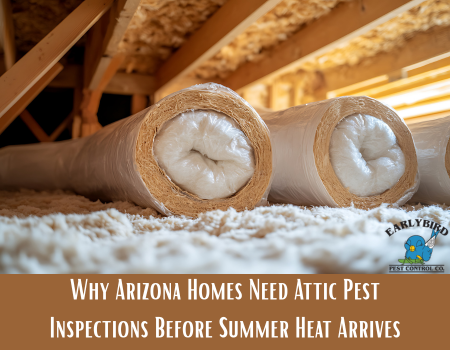
As Arizona heads into another triple-digit season, most homeowners focus on preparing their air conditioning systems and sealing their windows. But one area that gets overlooked every year is the attic. This space becomes dangerously hot during summer, often reaching temperatures between 130 and 160 degrees, and those extreme conditions dramatically change pest behavior. By the time homeowners notice signs of activity, an infestation has usually already begun. That’s why attic pest inspections are one of the smartest steps Arizona residents can take before the heat arrives.
How Rising Temperatures Drive Pests Into Attics
In the cooler months, pests such as rodents, roof rats, pigeons, pack rats, and even desert insects establish nests in quieter, easy-to-access outdoor spaces. But once temperatures quickly rise, many of their natural hiding places become too hot or too exposed. The result is a migration toward shaded, insulated, human-built structures, attics being the top destination.
The attic offers everything pests need: warm shelter at night, cooler corners during the day, and multiple exit points to search for food and water. Even though attics get extremely hot, pests are surprisingly adaptable. Rodents will nest in the insulation, birds will find rafters, and insects will use small pockets of cooler air near eaves or entry points. Without an inspection, homeowners rarely know the problem exists until noises, droppings, or strong odors begin to surface.
Attics Are Filled With Untapped Entry Points
One reason pests favor attics is the abundance of gaps, cracks, and construction openings that allow easy access. Arizona homes, especially those built in the last two decades—often have roofline vulnerabilities that naturally form as materials expand and contract under desert heat.
Common entry points include:
- Gaps around roof tiles
• Unscreened or damaged attic vents
• Openings near utility penetrations
• Spaces under eaves and fascia boards
• Cracks created by settling foundations
Because many of these points exist high above ground level, homeowners rarely notice when they open up. A quick attic pest inspection ensures these vulnerabilities are identified and sealed long before pests take advantage of them.
Why Infestations Become More Aggressive During Summer
When summer heat intensifies, pests inside the attic begin searching more aggressively for moisture. This leads them deeper into the home’s structure; chewing insulation, damaging wiring, contaminating air ducts, and gnawing through materials in search of cooler airflow paths.
Rodents, in particular, can become extremely destructive. With insulation acting as both bedding and a hiding place, they create tunnels across large sections of the attic. These pathways reduce insulation performance, raise energy bills, and introduce contaminants into the air circulating through the home.
Scorpions and insects are another concern. As outdoor temperatures rise, they look for shaded spaces with small air currents. Any attic crack, drywall gap, or utility opening can become a passageway leading directly into living spaces.
Insulation Damage Is a Major Hidden Risk
One of the biggest threats pests pose to Arizona homes is the long-term destruction of attic insulation. Nesting, tunneling, droppings, and urine all degrade the insulation’s effectiveness. As a result, the home heats faster, the AC must work harder, and energy costs climb significantly, just when residents rely on cooling the most.
Once insulation becomes contaminated, it often must be replaced, which is far more expensive than preventive inspections or sealing. Many homeowners only discover the extent of the damage once an HVAC company notices strange odors or an attic technician finds deteriorated sections.
Why Pre-Summer Inspections Make the Biggest Impact
Pest behavior is predictable: infestations tend to start or spike in late spring when temperatures climb rapidly. Early inspections let homeowners address these issues before pests settle into nests and before they begin searching for water inside the home.
A proper pre-summer attic inspection identifies:
- Current pest presence
• Structural vulnerabilities
• Contaminated or damaged insulation
• Hidden entry routes leading into the home
• Areas needing sealing, exclusion, or cleanup
With this information, homeowners can take preventative action rather than reacting to larger, more expensive problems during peak summer months.
Staying Ahead of Heat-Driven Infestations
Arizona’s desert climate creates unique pest pressures that intensify the moment temperatures rise. An attic that seems quiet in January can become a hotspot for rodents, insects, and birds by May, unless it is inspected and secured ahead of time.
By scheduling an attic pest inspection before summer, homeowners protect their insulation, maintain indoor comfort, prevent structural damage, and keep pests from spreading into the living areas of the home. It’s a small step that preserves energy efficiency, saves money, and keeps Arizona homes pest-free during the hottest months of the year.
Recent Comments